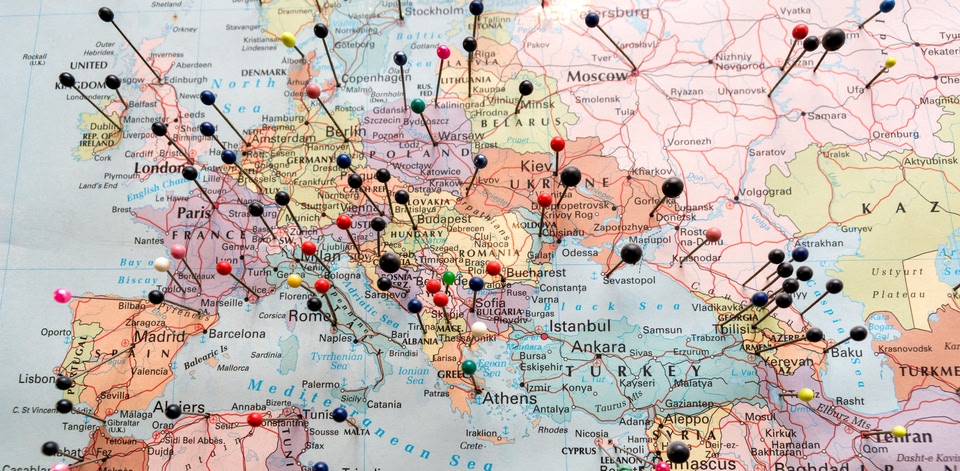

Flights may be delayed, rerouted or cancelled due to airspace closures affecting major transit hubs such as Dubai, Doha and Abu Dhabi. If your flight is affected, check your airline’s status page, avoid cancelling too early, and wait for rebooking or refund options before making changes.
Summary of the latest updates on the flight disruptions
Skyscanner is closely monitoring the changes to the flight schedules and flight cancellations in West Asia as of 2026. If you have an upcoming flight to Abu Dhabi's Zayed International Airport (AUH), Dubai International Airport (DXB) and Doha's Hamad International Airport (DOH), see the information below for updates on services from key carriers operating in the region.
While we aim to keep as up-to-date as possible, schedules are still being disrupted, so travellers are recommended to check the specific airport’s live arrivals and departures board for the latest updates before travelling.
The information below was up-to-date at the time of writing.
Last update 8 April 2026.
Major airports and transit hubs for Indian
At the time of writing, many flights from India have been cancelled due to the closure of the Middle East airspace. As a result, many flights operating through major transit hubs, including Dubai (DXB), Doha (DOH) and Abu Dhabi (AUH), are being cancelled, delayed or rerouted.
Airports including Dubai International Airport and Abu Dhabi’s Zayed International Airport have reopened, but may be operating with reduced services. Schedules could still be disrupted, so we recommend checking your airport’s live arrivals and departures board for the latest updates before travelling.
If you’re feeling anxious right now, that’s understandable. Most travellers in this situation are trying to answer the same urgent question: is my flight cancelled, and what do I do next?
At a glance: What to do right now
Start here. There’s no need to tackle everything at once — work through these step by step
Check your flight status using your airline’s website or app
Turn on airline notifications (email, SMS and app alerts)
Do not cancel your booking until you’ve checked your airline’s rebooking and refund options
Screenshot your booking confirmation and save airline messages
If you’re connecting through a major hub, check your full itinerary, not just your first flight
Keep receipts for any extra costs (food, hotels, transport and essentials)
If you booked through a third-party, read the section below before you take action.
If you are worried about whether it is safe to travel through a specific airport or region, check your government travel advice for your passport country. For Indian passport holders, this is the Government of India's Ministry of External Affairs.
First up: if you’re travelling soon
If your flight is today, you’re at the airport, or you’re already abroad and your plans have changed, your priorities are simple:
Get accurate information. Protect your booking. Keep a record of what happens.
1. Check your flight status in the right place
Go to the operating airline’s website or app and search by your booking reference or flight number
Third-party trackers can be useful for context, but they may lag behind and they will not show you your rebooking options. If you’re trying to make a decision, always use the airline’s channel first
If you are already at the airport, check the airline’s app as well as the departure boards. The app usually updates first
2. Turn on notifications so you are not guessing
Enable alerts for your booking by email, SMS and app notifications
In fast-moving disruption, airlines may rebook passengers automatically, and that information is often sent as a message rather than shown on a public departures screen
3. Do not cancel yet
This is what catches most people out when stress kicks in.
If you cancel your flight before the airline cancels or significantly changes it, you may reduce your refund or rebooking options. In many cases, your best protections apply only once the airline has cancelled or made a major change
If you are unsure, wait until you have seen what the airline is offering for your specific flight and ticket
4. If you are already at the airport, stay there until you have a plan
If you have a connection, speak to airline staff or the transfer desk before leaving the terminal. It is usually easier to resolve rebooking, connection and baggage issues while you are still at the airport. Confirm:
your new flight numbers and times
your updated boarding pass or booking confirmation
whether your baggage is checked through to your final destination
5. Document everything from the start
Save screenshots of:
your original booking confirmation
cancellation or delay messages
rebooking emails or app notifications
Keep receipts for meals, accommodation, transport and essential purchases if you are delayed. Even if you do not end up needing them, having a record protects you later.
If you booked through a third party and cannot get help
A lot of stress for travellers in these situations is not just the cancellation, but the loop between the airline and the booking provider. An all-too-frequent scenario: the airline says you must go to the agent, and the agent is hard to reach.
Here's how to handle it calmly and methodically.
Why the airline may not be able to refund you directly
If your ticket was issued by a third party (an online travel agent or booking site), the airline may be required to process refunds and changes through the issuing party rather than directly with you. This is frustrating, but it is common.
If you need to travel soon
Start by checking whether the airline has already issued an alternative itinerary. Some airlines rebook automatically.
Remember to check the contact details on your booking, as confirmations usually go to the email address listed there. If these are incorrect, you may need the booking provider to update them before the airline can help. This comes up often in disruption, especially if the booking was created using placeholder contact details.
What to do:
contact the booking provider and request they correct your email and phone number on the booking immediately
ask them to confirm, in writing, that the details have been updated with the airline
once updated, go back to the airline to request rebooking options
If you want a refund
If the airline has cancelled your flight, ask the booking provider to confirm:
whether the airline has authorised a refund for your ticket
whether the refund will be returned to the original payment method
the expected timeline for processing
If you have an email from the airline confirming refund eligibility, keep it and attach it when you contact the booking provider. It can speed up the process.
If you cannot reach the booking provider
Do three things in parallel:
use every official contact route they provide (email, phone, chat, contact form)
keep a record of your attempts, including dates, times and screenshots
avoid booking expensive replacement travel until you understand what you can reclaim
If you have urgent travel needs and cannot wait, you may need to book an alternative route. If you do, keep receipts and do not assume the cost will be reimbursed. Reimbursement depends on airline policy, passenger rights rules, and your insurance. See more in our comprehensive guide to travel insurance.
If you have a connection through Dubai, Doha or Abu Dhabi
If all flights are on one booking reference
If your journey is under one booking reference, the airline is generally responsible for getting you to your final destination. If you miss a connection due to a delay or cancellation, you should be rebooked.
If you booked separate tickets
If your flights are on separate bookings, the onward airline may treat you as a no-show if you miss the second flight. In that scenario, you may need to buy a new ticket unless your insurance covers missed connections on separate bookings.
If you’re mid-journey and your connection is at risk, speak to airline staff before leaving the airport. Confirm whether you need to collect your baggage or whether it is checked through.
If your flight is cancelled or significantly delayed
What happens next depends on your airline, route, and where you are departing from. In many cases, if your flight is cancelled, you should be offered a choice between:
rebooking or rerouting, subject to availability
a refund if you no longer wish to travel
Depending on the rules that apply to your journey, the airline may also have obligations around care while you wait, such as meals or accommodation for longer delays. In disruption linked to airspace closures, fixed compensation is often not payable, but rerouting and refund options may still apply.
For a fuller explanation of passenger rights and how cancellations and delays are handled, see our flight cancellations and delays guide.
If you're travelling with a non-Indian airline from a destination outside India, the airline may not be subject to the same obligations under Indian aviation regulations for cancelled flights. Refer to the terms and conditions of your booking. Learn more about the refund process and where to find our partner contact details.
What could travel insurance cover?
Travel insurance can help with disruption, but cover varies significantly by policy and may not apply in all circumstances.
Some policies may cover:
Accommodation and meals during extended delays
Alternative transport costs in limited circumstances
Missed connections, depending on policy wording
However, it’s important to check the exclusions carefully:
Most policies exclude acts of war, civil unrest and airspace closures linked to conflict
Many policies only begin covering costs after a delay reaches a minimum number of hours
Insurers usually expect you to use the airline’s rebooking or refund options first
Claims typically require written confirmation of the delay or cancellation and itemised receipts
With disruption linked to conflict or government airspace restrictions, cover may be limited or unavailable - you'll need to check with your insurer directly.
If you think you may need to claim, keep all documentation and review the travel disruption and exclusions sections of your policy before making assumptions about what’s covered.
For more details, see our travel insurance guide.
Always make sure you review the specific terms and conditions of your travel insurance policy to ensure you know what you’re covered for.
Looking for a different route?
If you’re comparing alternative routes, we’ve introduced the Layovers filter to help travellers refine their connection preferences when searching for new flights. It allows you to exclude specific connecting airports and adjust layover duration. The feature is available on desktop and mobile web.


If your airline offers a refund and you decide to rebook, you can use Skyscanner to compare alternate routes across airlines and hubs. The Layovers filter also allows you to exclude specific connecting airports when searching for new flights.
If your flight is disrupted: What to remember
Airspace closures can change quickly, and disruption at major hubs like Dubai, Doha and Abu Dhabi may continue to cause knock-on delays worldwide. If you’re travelling soon, keep checking your airline’s official updates, understand your refund and rebooking rights, and review your travel insurance policy carefully. Bookmark this guide for updates and use it as a step-by-step reference if your flight is delayed or cancelled.
FAQ: Flights disrupted after airspace closures
Related reading
More on your rights, refunds and what travel insurance may cover during disruption.

Flight delays and cancellations: your rights and options
Understand what your airline owes you if your flight is delayed or cancelled, including rebooking, refunds and care while you wait.