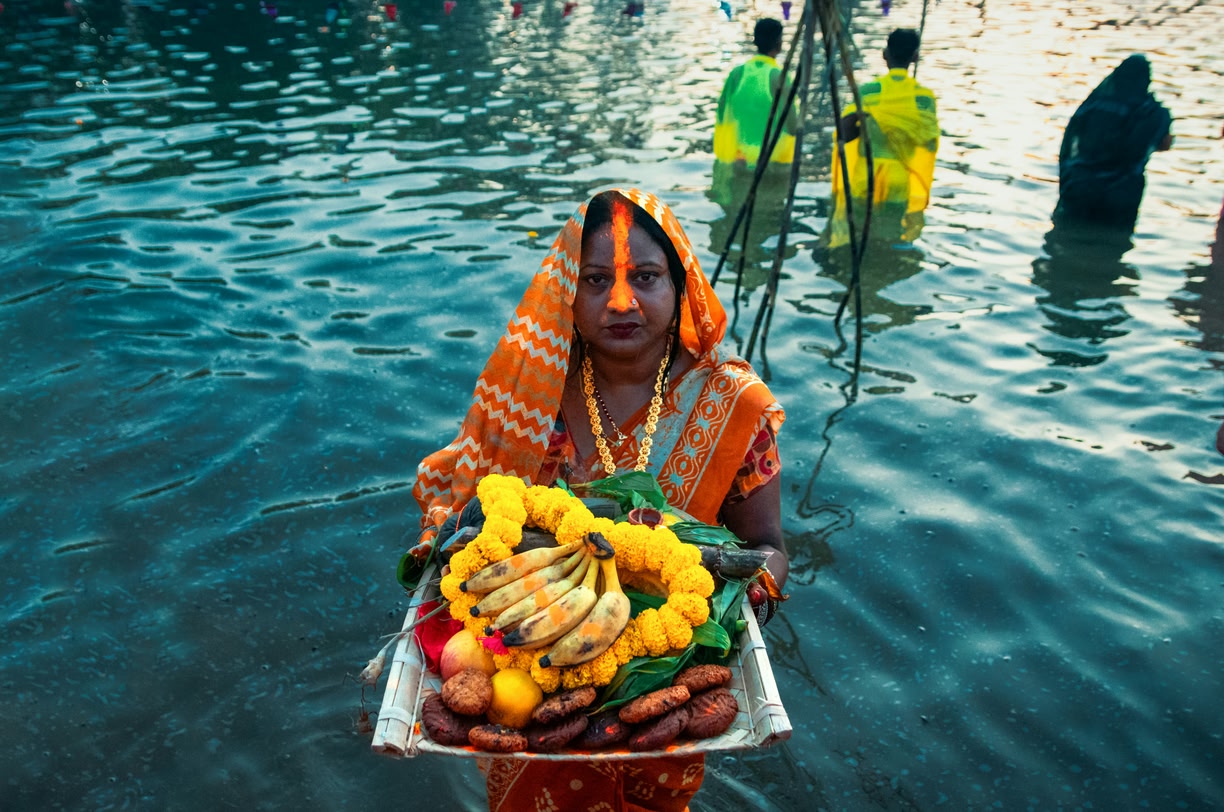
Culture-led tourism is on the rise among millennial and Gen Z travellers, with two in three planning trips primarily around Indian heritage, festivals and food.*
It seems there truly is no place like home, particularly for young desi travellers. According to a recent Skyscanner survey*, 84% of Gen Z and millennial travellers say their interest in domestic cultural travel has increased in recent years, with 67% actively planning trips primarily around cultural experiences.
The survey found gastronomy, craftsmanship and greater pride in Indian heritage to be among the forces driving this increased interest. More than 70% of respondents also said they would consider planning a trip specifically to attend a major festival, such as Durga Puja, Ganesh Chaturthi and Navratri Garba.
Together, these motivations point towards a desire to reconnect with our ROOTS:
R: Rediscovering Heritage
O: Offbeat Destinations
O: Once-in-a-year Experiences
T: Traditions and Taste
S: Shared Experiences
Results also showed that among travellers who had taken a domestic leisure trip during the previous 12 months, 85% had taken between one and four trips. Looking ahead, around 50% plan to take at least two culture-focused trips within India over the next year.
For those looking for ideas, here are eight of the best places to experience the cultural richness of India, from UNESCO heritage spots to unforgettable festivals such as Durga Puja in Kolkata and Rath Yatra in Odisha.

Kochi, Kerala
For coastal flavours and cultural crossroads
A visit to Kochi reveals how Kerala’s spice-trading past shaped one of India’s most multicultural port cities. Arab, Chinese and European merchants came in search of pepper, cardamom and cinnamon, and the cultural influences they brought still run through the food, from peppery seafood curries to coconut-rich stews. Start at the Paradesi Synagogue in Mattancherry’s Jew Town, a nod to Kochi’s once-thriving Jewish community, before heading to Mattancherry Palace. Its Ramayana murals bring the former Kingdom of Cochin to life, while its Portuguese origins, Dutch renovations and traditional Keralan design reflect the city’s trading history. End at the Kerala Kathakali Centre, where elaborate costumes, live percussion, mudras and expressive make-up turn familiar stories from Hindu epics into theatre.

Udaipur, Rajasthan
For Mewar heritage and living craftsmanship
Udaipur blends Rajasthan’s regal past with living craft traditions. Founded in the mid-16th century as the new capital of Mewar, the city remains closely tied to the legacy of its Maharanas. City Palace, expanded by successive rulers over more than 400 years, offers visitors a closer look at royal life through its ceremonial courtyards, private apartments and collections of armour, textiles and regalia. After dark, Bagore Ki Haveli’s Dharohar show turns an 18th-century courtyard into a stage for Ghoomar, Bhavai, folk music and puppetry. Beyond the palaces, Shilpgram keeps regional craft traditions alive through weaving, pottery and decorative arts, while Hathi Pol is known for miniature paintings and handicrafts. Bada Bazaar is another stop for traditional textiles, including Bandhani.

Almora, Uttarakhand
For Kumaoni culture and mountain traditions
Almora is a good place to understand Kumaoni culture, a distinct Himalayan tradition often overshadowed by Uttarakhand’s better-known pilgrimage centres, such as Haridwar or Rishikesh. The Katyuris ruled much of Kumaon before Almora was made the capital of the Chand dynasty in the 16th century, and the Govind Ballabh Pant Museum traces this history through sculpture, coins and other artefacts. It also displays Aipan, red-and-white ritual folk art associated with bringing good fortune in these parts. Visit in September for Nanda Devi Mahotsav, a five-day fair honouring the goddesses Nanda and Sunanda with folk performances, craft stalls and a dola procession. And don’t leave before dessert. You’ll be hard-pressed to find bal mithai and singauri as good outside of here.

Kolkata, West Bengal
For Durga Puja and pandal hopping
Kolkata becomes an open-air gallery during Durga Puja, a festival inscribed on the inscribed on the UNESCO Representative List of the Intangible Cultural Heritage of Humanity. Neighbourhood committees commission artists, sculptors, carpenters and lighting designers to build temporary pandals around the goddess Durga and her family. Part shrine and part art installation, these structures recreate temples, or use bamboo, fabric, recycled materials, sound and light to explore subjects such as the environment or social change. Pandal hopping is also a must. Move between neighbourhoods to see different interpretations and increasingly elaborate installations, each competing to capture the imagination. However, focus on North, Central or South Kolkata rather than losing hours crossing a crowded city filled with these temporary exhibits. And don’t forget to grab a kathi roll or two to fuel your hopping.

Mumbai, Maharashtra
For Ganesh Chaturthi on a city-wide scale
Long before you reach the pandals, you hear the dhols of Ganesh Chaturthi, the festival that fills Mumbai with prayers, music and colour. Start in Lalbaug, a central Mumbai neighbourhood with deep ties to the city’s former textile-mill communities and some of its best-known public Ganesh celebrations. Here you’ll find Lalbaugcha Raja, one of Mumbai’s most revered Ganesh idols, whose annual public celebration has been organised in the neighbourhood since 1934. Lakhs of devotees visit for darshan during the festival each year, so be prepared for long queues if you plan to join them. Alternatively, pay your respects to Mumbaicha Raja in nearby Ganesh Galli, which is known for its towering idols and elaborate displays.

Lucknow, Uttar Pradesh
For Nawabi heritage and centuries-old cuisine
Lucknow’s culture is found as much in its kitchens and workshops as in its Nawabi monuments. Begin at the 18th-century Bara Imambara complex to explore its Bhul Bhulaiya, a maze of narrow passageways and near-identical doorways, before passing through the beautiful Rumi Darwaza towards Chowk. In this centuries-old marketplace, chikankari embroidery takes centre stage, second only to the rich Awadhi street food. Come hungry. Galouti kebabs, biryani and, of course, Raheem’s Kulcha-Nihari all carry the influence of Lucknow’s former royal kitchens into the present. The century-old Mughlai establishment is particularly known for its slow-cooked mutton nihari perfectly paired with its distinctive ghilaf kulcha.

Puri, Odisha
For an ancient chariot procession that brings the deities into the streets
Puri is where Rath Yatra turns the broad Bada Danda into an avenue of chariots, chants and crowds. Once a year, Jagannath, worshipped here with his elder brother Balabhadra and sister Subhadra, leaves the Sri Jagannath Temple for Gundicha Temple, around three kilometres away. In local tradition, Gundicha is regarded as the deities’ aunt’s home and is also associated with Jagannath’s birthplace. The journey takes place on three towering wooden chariots, rebuilt each year by traditional artisans. Before the procession, the Gajapati Maharaja, Puri’s ceremonial king performs Chera Pahara, sweeping the chariot platforms with a golden broom. Devotees then pull the ropes as conches, cymbals and chants fill the road.

Kohima, Nagaland
For the Hornbill Festival and a celebration of many Naga identities
Set at around 1,444 metres among Nagaland’s green hills, Kohima is the state capital and the best base for reaching Kisama Heritage Village. Every 1–10 December, Kisama hosts the Hornbill Festival, which brings Nagaland’s distinct cultural groups together through dance, folk songs, textiles, food, crafts and indigenous competitions such as traditional shot put, tug-of-war and the slit-bamboo race. Between performances, browse woven shawls and baskets, and fill up on platefuls of unique dishes from Nagaland, such as smoked pork cooked with axone, a fermented soybean, along with bamboo shoots, and local greens prepared with arum, ginger and chillies. Indian travellers may require an Inner Line Permit (ILP) before travelling. Check the latest entry requirements before your trip.
Where will your ROOTS take you? A culture-led trip does not have to mean ticking off every monument or attending the country’s biggest celebration. It might begin with a dish you have always wanted to taste, a craft you have only seen online, or a festival that transforms an entire city.
Choose the tradition, flavour or story that sparks your curiosity, then build the journey around it. Compare flights, set a Price Alert and book early when travelling for fixed festival dates. Your next trip could take you deeper into India’s cultural story, and perhaps a little closer to your own ROOTS.


