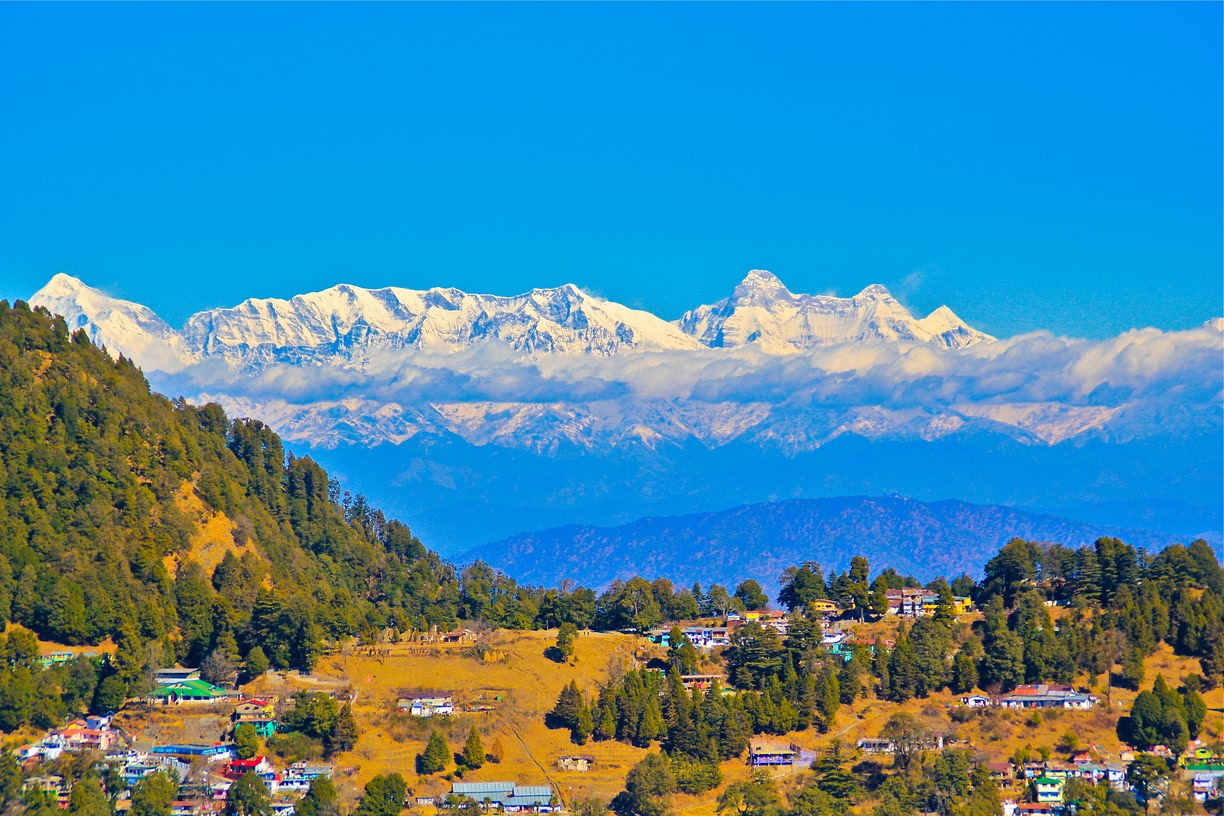
India's sheer scale makes it one of the most visually diverse countries on the planet and narrowing down its most beautiful places is no easy task.
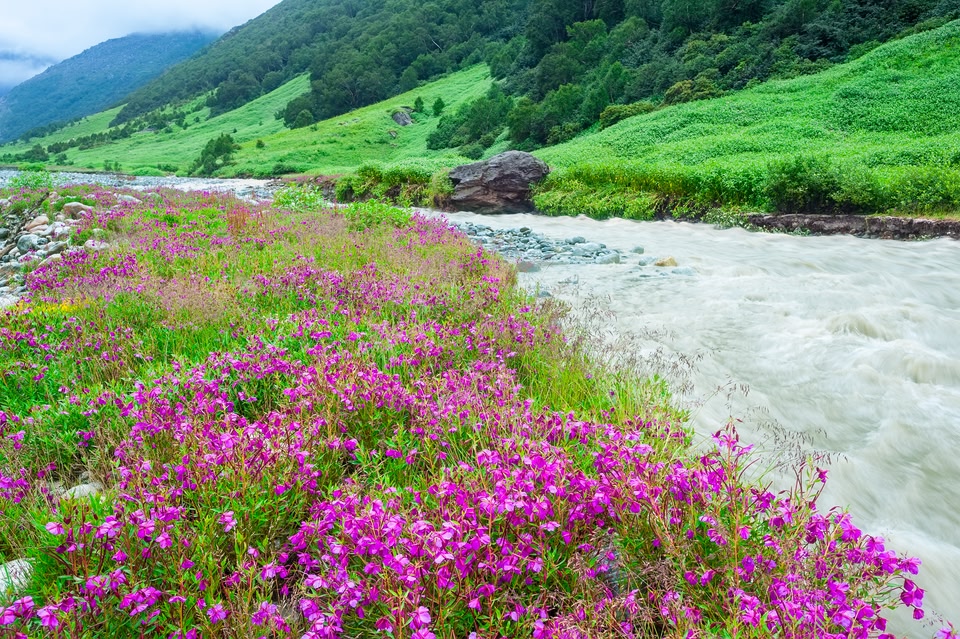
1. Valley of Flowers National Park, Uttarakhand
Blooming beauty
Carpeted in orchids, poppies, primulas, marigolds, daisies and anemones, the Valley of Flowers National Park is a landscape straight out of a dream. A UNESCO World Heritage Site set in the Garhwal Himalayas, the Valley of Flowers is home to over 500 species of alpine flora — many of them rare, some found nowhere else on earth. The 15 km trek to the valley passes glaciers, river crossings and dramatic gorges before the landscape opens up into something extraordinary. Come prepared for the altitude and the weather, and come between July and October to catch the blooms at their peak.

2. Key Monastery, Spiti, Himachal Pradesh
A place of peace and solitude
Standing in striking contrast to the barren, moon-like landscape around it, Key Monastery is one of the oldest and most revered Tibetan Buddhist monasteries in India. Built on a rocky hillock in the 11th century, this multi-storeyed complex serves as a training centre for lamas and houses a remarkable collection of murals, thangka paintings and ancient weapons. The best time to visit is May to October. In June or July, the monastery hosts a festival featuring Chham masked dances — a spectacle worth planning around.

3. The Little Rann of Kutch, Gujarat
Step into another planet
Covering over 5,000 square kilometres, the Little Rann of Kutch is one of India's most otherworldly landscapes. During the monsoon it lies submerged under water; come summer, it bakes into a vast, cracked salt flat that stretches to the horizon. At sunrise and sunset, the entire plain is washed in gold. It is also one of the last habitats of the endangered Indian wild donkeys. A detour to Ahmedabad is well worthwhile — the intricately carved, five-storeyed Adalaj Stepwell, built in 1498 by Queen Rudabai of the Vaghela dynasty, is a masterpiece of Indo-Islamic architecture.

4. Srinagar and Gulmarg, Jammu and Kashmir
Floating flower markets among mountains
"If there is paradise on earth, it is this, it is this, it is this." The Mughal poet's famous verse still rings true in Kashmir. In Srinagar, a dawn shikara ride on Dal Lake — with the Pir Panjal mountains rising behind the floating flower markets — is the kind of moment that stays with you. Wander through the Mughal gardens of Shalimar and Nishat, or time your visit for April when the Indira Gandhi Memorial Tulip Garden hosts Asia's largest tulip flower show. Gulmarg, 50 km from Srinagar, is India's premier skiing destination.

5. The ruins of Hampi, Karnataka
A taste of history
The dazzling Tungabhadra River cuts through a landscape of extraordinary granite boulders, and amid them lie the ruins of Hampi — once the capital of the great Vijayanagara Empire. Temples, palaces and market complexes emerge from the rocky outcrops, with the Virupaksha and Vijaya Vittala temples among the most celebrated. The lesser-known Hazara Rama temple is worth seeking out for its intricate carvings of scenes from the Ramayana. Declared a UNESCO World Heritage Site in 1986, Hampi draws over five lakh visitors a year.

6. Ziro Valley, Arunachal Pradesh
Beauty of the eastern Himalayas
Few places in India feel as genuinely undiscovered as Ziro Valley. Nestled in the foothills of the eastern Himalayas at an altitude of about 1,500 metres, this lush green valley is home to the Apatani tribe, known for their sustainable agricultural practices and distinctive cultural traditions. Rice fields and pine forests stretch across the valley floor, framed by misty hills on every side. Ziro also hosts the Ziro Music Festival each September, drawing independent artists and music lovers from across the country.

7. Coorg (Kodagu), Karnataka
Emerald hills
Coorg is a highland district in Karnataka carpeted in coffee and cardamom estates, dense forests and rushing waterfalls. The mist that clings to the hills most mornings gives the landscape a quiet, almost cinematic quality. Abbé Falls, Raja's Seat and the ancient Namdroling Monastery are popular stops, but Coorg rewards slow travel — an unhurried walk through a working coffee plantation, or a morning birdwatch in Nagarhole National Park, is often the highlight. The best time to visit is October to March.

8. Khajuraho, Madhya Pradesh
Architectural marvels
The temples of Khajuraho are among the most astonishing architectural achievements in medieval India. Built by the Chandela dynasty between the 9th and 11th centuries, these intricately carved sandstone temples are famous for their remarkably detailed sculptural panels — only a small portion of which depict the erotic scenes that have made them globally known. The broader carvings encompass celestial beings, hunting scenes, daily life and devotional figures, all rendered with extraordinary precision. A UNESCO World Heritage Site, Khajuraho is best visited between October and March.

9. Majuli, Assam
Slow living on the Brahmaputra River
The world's largest river island, Majuli sits in the middle of the Brahmaputra River in Assam and operates at its own unhurried pace. A centre of neo-Vaishnavite culture, it is home to a network of satras, monasteries that have preserved classical Assamese music, dance and mask-making for centuries. The island's wetlands attract a spectacular variety of migratory birds each winter, and cycling between the villages is a peaceful experience. Majuli is reached by ferry from Jorhat, with Jorhat Airport the nearest air connection.
India's travel landscape is constantly evolving. Check out Skyscanner's Travel Trends to see where Indian travellers are headed this year. If these destinations have you curious about what else lies off the beaten path, our guide to unexplored places in India is worth a read. Several of the places on this list, from Key Monastery in Spiti to Majuli in Assam, sit alongside some of the country's most remarkable religious architecture, covered in our roundup of beautiful monasteries in India. And if the trekking routes to destinations like the Valley of Flowers have caught your eye, head to our guide to the best treks in India for everything you need to plan your next adventure.


