
How to apply for a Schengen visa from India Planning a Europe trip? Here's how to get your Schengen visa sorted

Dreaming of croissants in Paris, Alpine views in Switzerland or a multi-country European adventure? Before the fun bit comes the paperwork. Here's how to apply for a Schengen visa.

A Schengen visa can be a gateway to discover huge portions of Europe. With one visa, you’re generally covered for short trips to visit the 29 Schengen countries, stretching from Norway’s arctic circle, where the Northern Lights can be seen dancing through the winter, all the way to down to Greece’s legendary island of Crete, blessed with gemstone coloured waters. 

This guide covers:

  • Visa requirements for the Schengen area

  • Which countries the Schengen visa covers

  • The cost of a Schengen visa

  • How to apply including processing times and how early to start

A photo of Athens at sunset with a view of the acropolis

What is a Schengen visa?

A Schengen visa (sometimes known as a Type C visa) is a short-stay visa for travellers (from countries that require one) to enter the Schengen area. This includes most Indian passport holders.

For short visits, you can usually spend up to 90 days in any 180-day period* in the Schengen area. 

*The European Commission has an official short-stay calculator that can help you work out if your planned trip meets this requirement.

There are three main forms of Schengen visa:

1. Single-entry visa:

2. Multiple-entry visa:

3. Airport transit visa:

This lets you enter the Schengen area from outside, once. This does not restrict travel to only one Schengen country. If your visa is valid for all Schengen countries, this visa permits travel between those countries during the same trip without using another entry.

Once you leave the Schengen area, you cannot use that single-entry visa to enter again.

This lets you leave and re-enter the Schengen area several times while the visa is valid.

For example, you could travel from India to France, return to India and later travel to Spain using the same visa, as long as it is still valid and you remain within your permitted length of stay.

This allows travellers to transit through the international area of certain Schengen airports without entering the Schengen area.

Which countries can you visit with a Schengen visa?

  1. Austria

  2. Belgium

  3. Bulgaria

  4. Croatia

  5. Czech Republic / Czechia

  6. Denmark

  7. Estonia

  8. Finland

  9. France

  10. Germany

  11. Greece

  12. Hungary

  13. Iceland

  14. Italy

  15. Latvia

  16. Liechtenstein

  17. Lithuania

  18. Luxembourg

  19. Malta

  20. Netherlands

  21. Norway

  22. Poland

  23. Portugal

  24. Romania

  25. Slovakia

  26. Slovenia

  27. Spain

  28. Sweden

  29. Switzerland 

*Correct as of August 2026. Always confirm with official government sources before booking your trip.

A standard Schengen visa is generally valid across the Schengen area, although you should always check the territorial validity and other conditions printed on your individual visa.

Which European countries are not covered by a Schengen visa?

Ireland and Cyprus are not part of the Schengen area. They operate their own entry arrangements, so Indian travellers should check the rules for those countries separately.

The UK is also outside both the Schengen area and the EU, so a Schengen visa does not replace any UK visa an Indian passport holder may need.

Is a Schengen visa the same as an EU visa?

No. Although people sometimes search for an EU visa or European visa, there is no EU visa. There is the Schengen visa for the countries that fall in the Schengen zone, or country-specific visas for countries in Europe outside of Schengen. 

It’s also important to remember that the European Union and the Schengen area are not the same thing.

Definition

What does it mean?

What does it mean for Indian travellers?

Schengen area

A group of 29 European countries that apply common short-stay visa rules and have generally removed checks at their shared internal borders.

A valid uniform Schengen visa can generally be used to travel within the countries covered by that visa.

European Union (EU)

A political and economic union of 27 European member states.

EU membership does not determine whether the visa applies. 

Ireland is in the EU but not Schengen area.

Iceland, Norway, Switzerland and Liechtenstein are in the Schengen area but not the EU. 

Europe

The geographical continent. It includes EU, Schengen, and non EU/ Schengen countries. 

There is no single visa covering every country in Europe. There are country-specific visas, such as for the UK and Ireland, or region-specific visas, such as the Schengen visa.

Are there exceptions to travelling throughout Schengen without a visa?

Most travellers receive a uniform Schengen visa, which is generally valid for all Schengen countries. However, under exceptional circumstances, a visa may be permitted with limited territorial validity (LTV), meaning it is only valid for the country that issued it, or for specifically named Schengen countries rather than the whole Schengen area. 

This exception is determined during the individual visa decision so check the ‘valid for’ field on your visa. 

A photo of plaza España in Sevilla, Spain

How to how to apply for a Schengen visa from India: Step by step

The exact process varies slightly depending on which Schengen country handles your application, but most Indian travellers follow these steps:

Identify where you'll spend the most time, as that should be the country for your application. If your stays are equal, use your first Schengen destination to determine the correct country for your application.

Visit the official embassy or consulate website for your main destination. It should explain:

  • Where applications are submitted

  • Whether you need to use an authorised visa application centre

  • How to book an appointment

  • Which documents are required

  • How the application fee is paid

Do not assume the application process for one Schengen country is identical to another.

Typical Schengen visa requirements include:

  • Your passport

  • Application form

  • Photograph

  • Travel medical insurance

  • Evidence covering your itinerary, accommodation, finances and intention to return to India

All Schengen short-stay applications use the European Commission Schengen visa application form. However, the country processing your application may ask you to complete those details through its own online system instead.

For example:

Check details such as:

  • Name and passport number

  • Travel dates

  • Destination countries

  • Intended number of entries

  • Accommodation

  • Travel purpose.

Make sure the information on the form matches your supporting documents.

You may be asked to provide biometrics during your Schengen visa appointment. Rules vary depending on which country you are applying to.

A visa centre may charge a separate service fee when it collects applications on behalf of a consulate.

Processing normally takes around 15 calendar days after an admissible application is lodged. However, an individual application can take up to 45 calendar days if the authorities need further examination or additional documents.

That processing period is separate from the time it might take to secure an appointment, prepare your documents and have your passport returned. In busy travel periods, those extra stages can make your overall application timeline considerably longer.

Your visa should include:

  • Name

  • Passport number

  • Visa validity dates

  • Permitted number of entries

  • Authorised length of stay

If anything appears incorrect, contact the authority that issued the visa. Travelling with incorrect information could cause problems when you arrive at the airport or as soon as you go through customs.

Where should you apply for a Schengen visa from?

  • If you're visiting one Schengen country, apply through that country.

  • If you're visiting several countries, apply through the country where you'll spend the longest time.

  • If you'll spend an equal amount of time in several countries, apply through the first Schengen country you plan to visit.

Top tip

Application arrangements in India differ between Schengen countries. Follow the specific process as laid out by the official embassy for your main destination.

What documents do you need for a Schengen visa from India?

The exact visa requirements for the Schengen area vary according to your destination, circumstances and reason for travel. At a minimum, official EU guidance says applications normally require the following:

For a normal short-stay application, your passport should:

  • Have been issued within the previous 10 years

  • Normally have at least two blank visa pages

  • Remain valid for at least three months after the date you intend to leave the Schengen area.

Visit the Embassy or Consulate website for the specific country you’re applying to. (We’ve provided links under ‘Which countries can you visit with a Schengen visa?’

Photo specifications can be confirmed by the country handling your application. As an example, the Netherlands' official Schengen checklist requires a:

  • Colour photograph

  • Taken within the previous six months

  • 35 mm × 45 mm size

  • White or light-coloured background

Check out our guide on travel insurance for Indian travellers for more info.

This can include:

  • A travel itinerary

  • Accommodation reservations

  • Transport or flight reservations

  • If you're visiting friends or relatives, you may need an invitation from your host and sponsorship or private-accommodation documentation required by the country you're visiting. Keep their address and contact information on record.

While rules vary by country, the standard baseline is to demonstrate that you have ‘sufficient means of subsistence’ to cover your daily expenses, including food, transport and accommodation, plus your return journey. 

This could include

  • Personal bank statements

  • Proof of stable Income

  • Official income tax returns 

  • A formal sponsorship letter alongside the sponsor's certified bank statements, employment letters, and a document proving your legal relationship to them 

  • Secondary financial assets

Always check with the official embassy or consulate of where you’re applying to.

You must account for every single night you plan to spend in the Schengen Area when applying and this proof must match your travel dates and itinerary. You can include:

  • Hotel, hostel or rental-apartment bookings

  • An invitation from family or friends

  • A pre-paid tour itinerary if joining an organised tour

For example, a return flight reservation can form part of this evidence, but it isn't the only thing the authorities assess. Consulates assess whether they believe you intend to leave the Schengen area before the visa expires. Evidence can therefore include your return journey alongside your social and economic ties to India.

Depending on your circumstances, country-specific checklists may ask for documents such as:

  • An employment contract

  • A letter from your employer approving your leave

  • Recent payslips

  • Business registration and business bank statements if you're self-employed

  • Indian income-tax records

  • Proof that you're enrolled as a student

  • Pension information

  • Evidence of property or other economic ties

Image of Lausanne in Switzerland

Do you need to book flights before applying for a Schengen visa?

You may need to provide a flight reservation or travel itinerary, but that does not necessarily mean you should buy a non-refundable flight before your visa is approved. Requirements vary according to the country handling the application.

For example, the German Missions in India include a flight reservation in their tourism visa checklist. They also state that having a booked flight does not result in preferred processing of a visa application.

Top tip

Use Skyscanner to book flights to Europe that offer changes and cancellations to show your intended travel plans for flexibility while your visa is pending. 

Do you need confirmed hotel bookings?

Official EU guidance includes accommodation among the supporting evidence required for a visa application. However, this doesn’t necessarily mean you need to book a hotel specifically. For example, country-specific guidance may accept:

  • Hotel reservations

  • Holiday rental reservations

  • Other booked accommodation

  • Evidence that you'll stay with a friend or family member

  • Sponsorship or host documentation.

German tourism guidance for India, for instance, accepts hotel reservations, holiday-home or campus accommodation reservations, or specified evidence of private accommodation with a host.

Always check the relevant official checklist before paying for accommodation.

Also, you should generally expect to account for your accommodation throughout the trip, particularly if you are travelling between several Schengen countries. For example, the Netherlands' official India tourism checklist requires a reservation for the entire trip and, where several Schengen countries are being visited, proof of accommodation for each country.

Top tip

On Skyscanner, you can filter accommodation by those that offer free cancellation or flexible cancellation terms. 

How much does a Schengen visa cost?

The official Schengen visa application fee is based on the applicant's age or exemption category rather than whether a short-stay visa is issued for single or multiple entry.  

However, an authorised visa application centre can charge a separate service fee, so the total amount you pay to submit an application may be higher than the official visa fee.

Type

Adults

Children (6-12)

Children under 6

Single-entry visa

90 EUR

45 EUR

No visa fee

Multiple entry visa

90 EUR

45 EUR

No visa fee

Airport transit visa

90 EUR

45 EUR

No visa fee

Children under six still need a Schengen visa application where a visa is required, but they do not pay the visa fee. Children under 12 are also exempt from providing fingerprints.

*Prices valid as of August 2026

If the fee is identical, why not always apply for a multiple-entry visa?

Because requesting one doesn't guarantee you'll get one. You can tick the multiple-entry box on the application, but the consulate decides what to issue based on factors like your travel plans, visa history, financial situation and whether you've complied with visa rules in the past. Multiple-entry visas tend to go to travellers who can demonstrate a genuine need to visit the Schengen area regularly, so if you're just taking a one-off two-week holiday, don't count on receiving one.

Who can get a Schengen visa fee waiver?

There are exemptions for certain applicants. These include, among others:

  • Children under six

  • School pupils, students, postgraduate students and accompanying teachers travelling for study or educational training

  • Qualifying researchers travelling to carry out scientific research

  • Representatives of non-profit organisations aged 25 or under who are participating in certain seminars, conferences, sporting, cultural or educational events

Different rules can also apply to qualifying family members of EU or EEA citizens exercising free-movement rights.

How long does a Schengen visa take to process?

The standard Schengen visa processing time is normally 15 calendar days. In individual cases, this can be extended to up to 45 days if the application requires further examination or additional documents.

Remember that this is the decision period for the visa application. Your overall planning timeline may also need to account for:

  • Finding an available appointment

  • Preparing your documents

  • Submitting through an application centre

  • Passport collection or delivery.

Processing arrangements can also differ between consulates.

How far in advance should you apply for a Schengen visa?

You can apply up to six months before your trip, and applications must be submitted at least 15 days before you travel. Aim to apply well ahead of that minimum deadline, though — especially if you're booking expensive flights or accommodation, or travelling during peak periods. Giving yourself a buffer allows time to secure an appointment, gather your documents and absorb any delays if your application needs additional checks.

What if your Schengen visa is delayed and you've already booked flights?

A booked flight won't guarantee your application is approved or processed before you're due to leave, and it won't push you to the front of the queue. This is one of the strongest reasons to apply as far ahead of the minimum deadline as you can — and to favour flexible flight tickets and refundable accommodation, so a delay doesn't cost you.

How long is a Schengen visa valid for?

The validity of your Schengen visa is individual to the visa you're issued. There isn't one standard validity period given to every traveller.

The decision can reflect factors including:

  • Your planned travel dates

  • The number of entries needed

  • Your previous visa and travel history

  • Whether you have previously complied with Schengen visa conditions

  • The purpose and frequency of expected future trips

  • How long your passport remains valid.

Check both:

  • 'From' and 'until' to clarify the period during which the visa can be used

  • 'Duration of stay' to clarify the number of days you are actually authorised to spend in the Schengen area.

A Schengen visa may permit a single entry or multiple. With a multiple-entry visa, you can make several trips during its validity period, but you must still follow the applicable 90 days in any 180-day period rule.

A longer validity period therefore does not give you permission to remain in the Schengen area continuously.

What happens if you renew your passport while your visa is still valid?

If you renew your passport while an existing visa is still valid, the visa may not automatically become unusable. Some Schengen countries allow travellers to carry the old passport containing the valid visa alongside their new passport.

Rules can depend on the country that issued the visa and whether the old passport or visa has been cancelled or damaged, so check with the issuing country's official visa service before travelling with both passports.
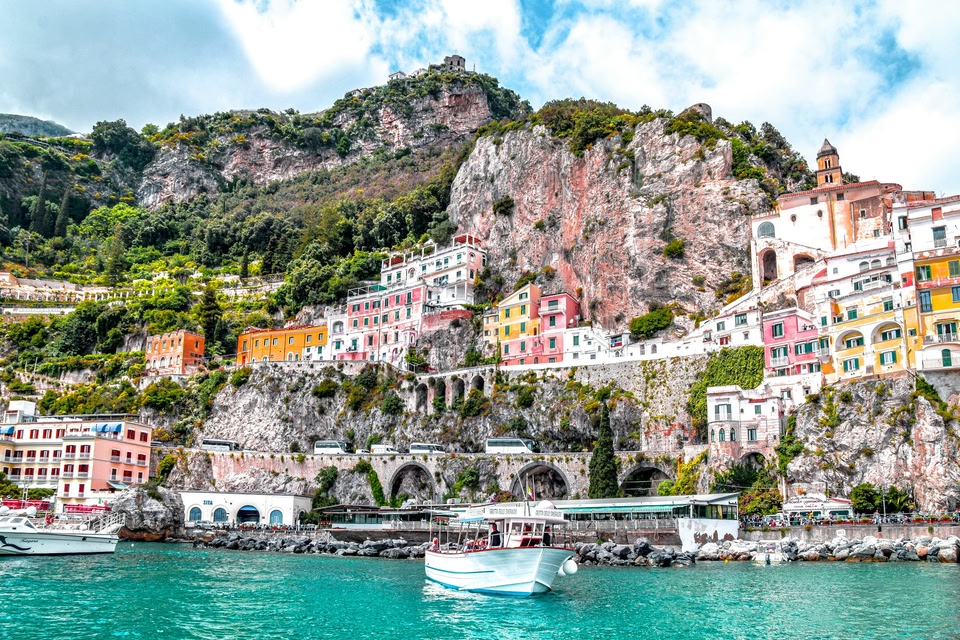
An image of the Amalfi coast

Can Indian travellers get a five-year Schengen visa?

Yes. Indian travellers with an established Schengen travel history may qualify for longer-validity multiple-entry visas under the India-specific visa ‘cascade’ introduced in 2024.

These can be two-year and five-year multiple-entry visas, rather than a visa issued only around the dates of one planned holiday.

Indian nationals residing in India and applying in India can be issued a two-year multiple-entry visa after they have:

  • Obtained two Schengen visas

  • Lawfully used both visas

  • Done so within the previous three years

  • Enough passport validity remaining for the longer visa.

The two-year visa will normally be followed by a five-year multiple-entry visa if the passport has sufficient validity remaining. However, the five-year visa still does not let you spend five continuous years in Europe. The short-stay limit continues to apply.

What you need to know about the new Entry/Exit System 

EES is an automated system that records non-EU nationals making short stays when they cross participating European land, sea and air border entry points. It electronically records your travel-document information and your entries and exits instead of relying on routine manual passport stamps. The system helps authorities calculate how much of your permitted short stay you have used.

Border officers can capture a facial image and/or scan fingerprints as part of this. 

The Entry/Exit System (EES) applies to Indian citizens travelling to participating European countries for a short stay, whether they:

  • Need a short-stay visa, as Indian passport holders generally do, or

  • Are visa-exempt.

It became fully operational at the external borders of the European countries using EES on 10 April 2026 but is still being rolled out. Therefore, your experience at border entry might change each time, or you may have to repeat certain aspect, such as fingerprint reading, each time you enter the Schengen Zone during the roll-out phase.

  • There is no separate EES visa application to complete before travelling.

  • EES does not replace your Schengen visa

Don’t make these common Schengen visa mistakes

Visa validity is the period between the ‘From’ and ‘until’ dates during which you can use the visa.

There is no single validity threshold that applies to every approved application. The visa you receive can be tailored to your trip and circumstances, while eligible frequent travellers can receive longer-validity multiple-entry visas.

Length of stay tells you how many days you're authorised to be in the Schengen area.

Short stays are capped at 90 days in any 180-day period. Think of the 180 days as a moving window rather than fixed six-month blocks.

On each day you're in the Schengen area, you look back at the previous 180 days and count how many of those days you were in Schengen. That total cannot exceed 90.

So leaving the Schengen area does not automatically reset your allowance to another 90 days. Days from earlier trips remain part of the calculation until they move outside the relevant 180-day window.

Apply through your main destination. If you'll spend equal time in several Schengen countries, use the first country you'll visit.

Standard processing is normally 15 days but can extend to 45 days. Add in extra time to secure your visa appointment.

Country-specific requirements can differ. Follow the official checklist for the consulate processing your application.

Check your name, passport number, dates, permitted entries and authorised stay before travelling so you still have time to rectify any errors.


The Schengen area isn't the same as the EU, so don't confuse the two. The EU is a political and economic union; the Schengen area is a border-free travel zone, and belonging to one doesn't mean belonging to the other.

Iceland, Liechtenstein, Norway and Switzerland are in Schengen but not the EU. Ireland is in the EU but not Schengen, and Cyprus is an EU member that hasn't yet fully joined the border-free area.

A Schengen visa application checklist for Indian travellers

  • Once you're within six months of your planned trip, check the application process and appointment availability for the country handling your visa.

  • Confirm which Schengen country is your main destination

  • Check that country's official application process in India

  • Download or complete the correct Schengen visa application form

  • Prepare your passport and supporting documents

  • Arrange the required travel itinerary and accommodation evidence

  • Check the travel medical insurance requirements

  • Book your visa appointment

  • Submit the application and provide biometrics where required

  • Pay the visa fee and any applicable service charge

  • Track your application through the official channel

  • Allow extra time in case further checks or documents are required

  • Check the visa details carefully when your passport is returned

  • Recheck the latest entry requirements before you travel

For more travel guidance, check out our tips on travelling abroad for the first time, or explore visa-free destinations for Indian passport holders and visa-free countries across America and the Caribbean. And if your travel document needs sorting first, here's how to apply for or renew your passport.

FAQs about applying for a Schengen visa for Indian passport holders

Yes. Indian passport holders generally need a Schengen visa before travelling to the Schengen area for a short visit, unless they qualify for a specific exemption.

For tourism, visiting friends or family and many short business trips, Indian travellers will normally need to apply before leaving India.

A short-stay Schengen visa does not give you the right to work in the Schengen area. Separate national rules apply to longer stays, employment and residence.

Apply to the country that is your main destination. If you'll spend the same amount of time in several Schengen countries, apply through the first one you'll visit.

Applicants generally need a valid passport, completed application form, photograph, travel medical insurance and evidence covering the purpose of the trip, accommodation, sufficient funds and intention to return home. Individual consulates can ask for additional documents.

A short-stay multiple-entry Schengen visa can be valid for up to five years.

For eligible Indian applicants, the India-specific cascade allows a two-year multiple-entry visa after two lawfully used visas within the previous three years, normally followed by a five-year multiple-entry visa if passport validity allows.

A five-year validity period does not mean you can stay in Schengen for five years. You must still comply with the short-stay rules on every trip.

No. There isn't one general tourist visa officially called an ‘EU visa’ that covers every EU country. For short trips within the Schengen area, the relevant permit is normally a Schengen visa.

The standard visa fee is currently €90 for adults and €45 for children aged six to under 12. Children under six are generally exempt from the visa fee. Visa application centres may also charge a separate service fee.

Applications can generally be submitted up to six months before the intended journey and should normally be lodged at least 15 days before travel. Applying earlier than the minimum deadline gives you more time for appointments and possible processing delays.

The general Schengen processing period is normally 15 calendar days, although individual applications can take up to 45 days where further examination or documents are needed.

Check the requirements of the country handling your application. You may need to provide a flight reservation or itinerary, but that does not necessarily mean you need to purchase a non-refundable ticket. Having a booked flight also does not guarantee faster visa processing.

Generally yes, a standard Schengen visa lets you travel throughout the Schengen area, subject to its territorial validity, dates, permitted number of entries and authorised length of stay. Just check whether yours allows single or multiple entries.

Yes, generally. ‘Single entry’ refers to entering the Schengen area from outside it once, not to visiting only one country. For example, after entering France from India, you could generally continue to Belgium, the Netherlands and Germany without making another external entry into Schengen.

But if you then leave the Schengen area and return to India, you cannot normally use that same single-entry visa to re-enter.

Always check the countries listed under ‘valid for’ on your visa.

A single-entry visa normally lets you cross into the Schengen area once.

A multiple-entry visa lets you leave the Schengen area and subsequently return while the visa remains valid. That could mean returning to India between two European holidays or travelling to a non-Schengen country during a wider trip before re-entering Schengen.

In either case, you must comply with the duration of stay shown on the visa and the applicable 90-days-in-180 rule.

No. A visa allows you to travel to the border and request entry, but border authorities still check whether you meet the applicable entry conditions. Carry relevant travel documentation and make sure your plans match the conditions of your visa.

The basic application requirements still apply each time, but previous lawful Schengen travel can make a difference.

For a first application, you won't have an established Schengen visa history for the consulate to consider, so you should expect to provide the full supporting evidence requested for your circumstances.

When you have applied before:

  • Information about your previous visas is recorded in the Visa Information System

  • Fingerprints collected for a previous Schengen application can generally be reused for subsequent applications for up to 59 months, although you can be asked to provide them again in some circumstances

  • A positive record of obtaining and lawfully using previous visas can support eligibility for longer-validity multiple-entry visas.

For Indian nationals in particular, the 2024 visa cascade means that obtaining and lawfully using two Schengen visas within the previous three years can make an eligible applicant a candidate for a two-year multiple-entry visa.

So previous applications don't guarantee approval, but a good travel and visa history can influence the type and validity of visa you're eligible to receive.

Paperwork done? Skyscanner can help you find all the best flights, hotels and car hire options for your trip.

Return selected
Return selected
origin
Enter the city you're flying from, or choose from the options below
Include nearby airports
    selected
    destination
    . Enter your destination, or choose from the options below
    Include nearby airports
      selected
      Travellers and cabin class, 1 Adult, Economy