
Beautiful beaches. Monkey Mountain. Dragon Bridge. And Ba Na Hills. Da Nang is 1,285 square kilometres of Vietnamese fun and all accessible. These are the best ways to get around Da Nang.
And to make the most of it, you need to get around the city like a local. In our Da Nang transport guide, we’ll run through all your Da Nang transport options. Soon you’ll be Grabbing a taxi whenever you need one, cycling along beautiful My Khe Beach or taking the bus like a pro.

1. Taxi
Best Da Nang transport for quick trips
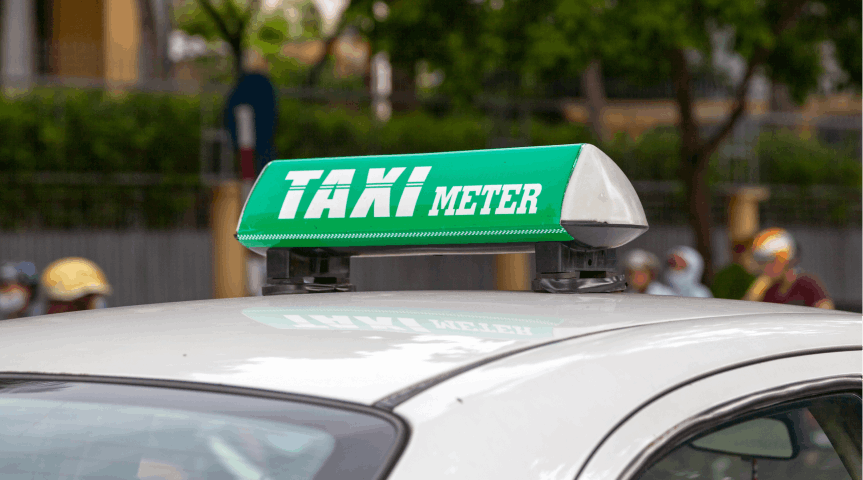
You can easily book a metered taxi for fairly low cost in Da Nang – it will set you back around VND 15,000 for a four person cab. You can ask your hotel to call you a taxi, with the most popular companies being Mai Linh and Taxi Xanh. Check the local Da Nang transport guide to get the latest prices and availability.
You’ll also see them – look out for green taxis – at the major tourist spots, shopping complexes, bus stations and train stations. Hail one in the usual way by raising your hand in the air for a taxi with its light on. Or you can book one of the many motorcycle taxis – known as xe om to locals – you’ll see at the major tourist hubs. Just like at home, you can barter for a set price before you set off on your journey. Trips are super cheap and you won’t get hassled by the drivers like sometimes happens in Hue.
Agreeing a set fare with a motorcycle taxi means you’ll know the exact cost of your trip, and you can negotiate before you hop on the back, but there's a higher chance of getting ripped off. With a local taxi, you’ll know you’re paying the right fare.
2. Grab App
Cost-effective and convenient
Grab is the most popular taxi app in Vietnam, and has completely taken over from Uber. You’ve likely used Grab back home in India and it works in just the same way in Vietnam. If you’ve not used it before, download the app to your phone and pick up a Grab taxi in Da Nang for safe and secure travel.
Simply put in your chosen destination and book a ride from your pickup point, and you’ll know the exact price before you start your journey. It keeps you safe from bargaining and potentially being overcharged. And it’s often cheaper than local taxis too.
Most taxi drivers in Da Nang don’t speak English. You need to be super sure of your pickup and drop off spot to avoid any confusion with your driver. Show a map pinpoint of your destination for clarity.
3. Bicycle
Take a relaxing ride
If you’ve travelled up from Ho Chin Minh City or down from Hanoi, you might be put off from getting on two wheels and cycling amongst the traffic. But the roads of Da Nang are much quieter, less crowded and a lot greener than those two cities.
So hop on your bike and get exploring the city. You’ll find a lot of bike rental places in Da Nang, especially along the Bach Dang Road but if you want to book in advance, choose a reputable option like Just Bikes Da Nang.
And whilst you might not be ready to throw yourself amongst the traffic just yet – although if you’ve cycled at home you’ll be fine – you can enjoy a pleasant ride along My Khe Beach and a dip in the water.
Bach Dang Road is also ideal for a relaxing cycle along the banks of the Han River. You can check out Dragon Bridge, do a little shopping at Indochina Riverside Shopping Mall or stop for a coffee or lunch at one of the many cafes. There’s a slower pace of life along Bach Dang Road – cycling is one of the best ways to enjoy it.

4. Bus
Cheap and exciting
Whilst the bus service in Da Nang might not be as advanced as the likes of Ho Chi Minh City or Hanoi, you can use it to get around the city. There are around 15 separate routes that take you all around Da Nang with most fares costing around VND 5,000 paid to the driver when you get on.
Buses run from 5am to 9pm and come around every 10 to 30 minutes. Information at bus stops themselves is limited and most locals don’t use the bus so you’ll struggle asking them for help.
Here are a few of the best bus routes in Da Nang:
The number 1 from Da Nang bus station to Hot Ann goes through Marble Mountains. It will also take you to a few shops in the city.
The number 11 runs from Da Nang railway station to the Marble Mountains.
The number 6 goes from Da Nang bus station to the village next to My Son Historical Park.
If you’re determined to navigate the city by bus, download the DanaBus app. It allows you to set routes, view them on a map, find the nearest stops and get the times of buses. You’ll also see how much it costs too.
5. Car Hire
Simple and flexible
You can hire a car in Da Nang either to pick up in the city or when you arrive at the airport. It's ideal for seeing the sights at your own pace, and particularly useful if you're planning to travel on to Hoi An or Hue — both are easy drives along the coast or over the scenic Hải Vân Pass.
If you're used to driving at home, you'll find driving in Da Nang relatively straightforward. Just remember that traffic flows on the right side of the road, and check whether your licence from home is valid before you travel, as requirements can vary by nationality.
Book your rental in advance where possible, especially during peak season (July to August and around Tết), when availability tightens and prices rise. Most major international rental companies operate out of Da Nang International Airport alongside local operators, who often offer competitive daily rates. Fuel is inexpensive by international standards, toll roads apply on some stretches so keep small cash handy, and parking near popular attractions is generally easy to find. One thing to be aware of: city traffic can be hectic, with motorcycles dominating the roads. Take it steady until you find your rhythm.
Now you know how to get around Da Nang, it’s time to check out what to see with our guides on the top attractions and best beaches and where to stay.


