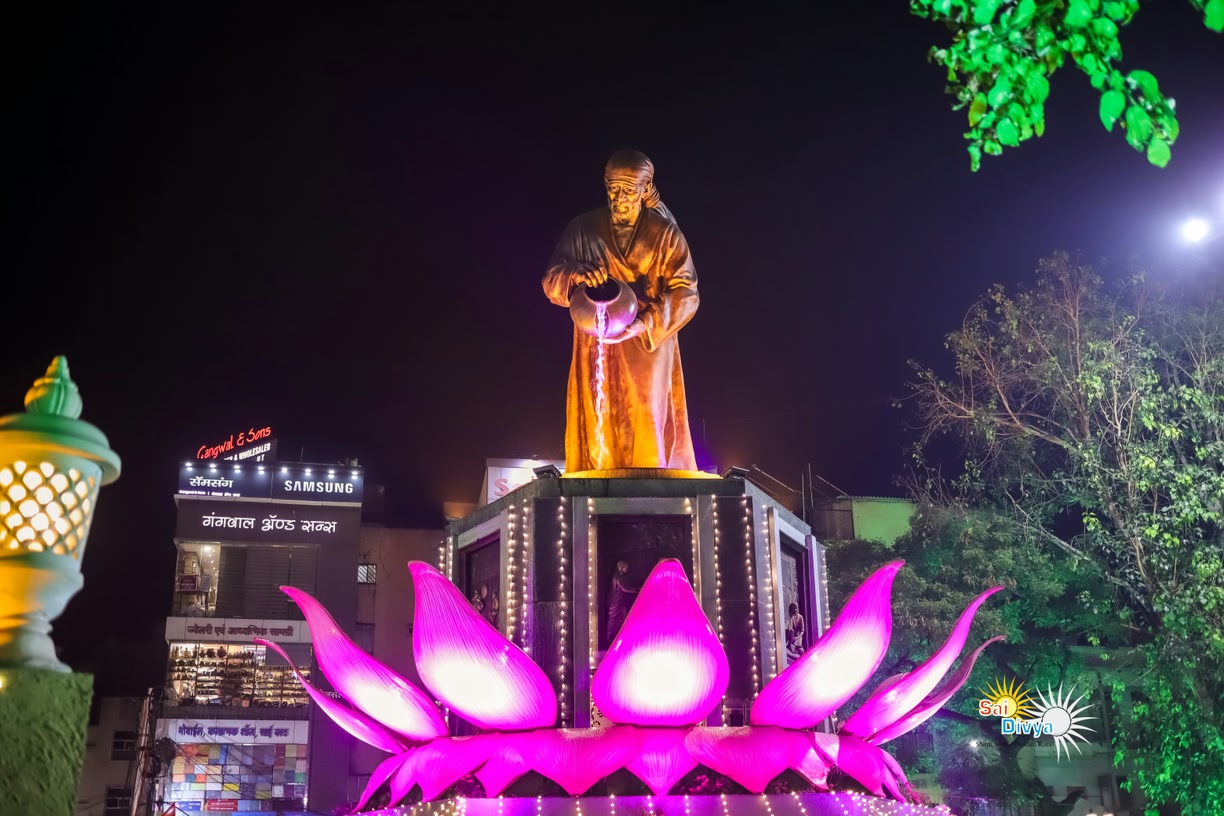
Planning a spiritual trip to Maharashtra? Here’s your complete guide to visiting the famous Shirdi temple.
Shirdi, the abode of Sai Baba
Located in Maharashtra, Shirdi is a small town with a profound legacy. Just under 300km from Mumbai, it is well connected to other major cities in the state and draws thousands of devotees every day. This was once the home of the revered spiritual leader Sai Baba, whose teachings of unity, compassion and faith resonate across religious lines. His final resting place, the Shirdi Sai Baba temple, also known as Shree Samadhi Mandir, is a place of deep devotion and peace.
Inside the Shirdi temple
Sai Baba is regarded by his devotees as an incarnation of the divine, with some venerating him as a form of Dattatreya and others as Lord Shiva. Though the details of his early life remain a mystery, he spent most of his adult life in Shirdi, returning in 1858 after a brief disappearance, and attained Mahasamadhi in October 1918. His tomb, or samadhi, lies within the temple, making it the most significant site for his followers.
Inside the Shirdi Sai Baba temple, a marble idol of Baba sits adorned with an embroidered robe, a gold crown and fresh garlands. The temple itself is architecturally modest, but its steeple is covered in gold, signifying its spiritual and cultural importance.
Shirdi Sai Baba temple aarti timings
The temple holds four daily aartis (prayer services), each marking a time of day:
Kakad Aarti (morning) – 5:15am
Madhyan Aarti (afternoon) – 12:00pm
Dhoop Aarti (evening) – at sunset, so the time shifts through the year
Shej Aarti (night) – 10:00pm
The temple opens at 4:45am, and darshan in the Samadhi Mandir begins at around 6:25am once the morning rituals are complete. On Thursday nights, a palanquin procession carries Baba's portrait and silver paduka from the Samadhi Mandir to the Chavadi after Shej Aarti, in a torchlit walk accompanied by chanting and bhajans. Timings can change on festival days, so it is always worth confirming the latest schedule on the official Sansthan website before you travel.
Booking your darshan and aarti
Given the crowds, it is worth booking ahead. The Shri Saibaba Sansthan Trust runs an official portal at online.sai.org.in where you can reserve darshan slots and accommodation. Aarti passes are booked separately from darshan passes, so if you want to attend a specific aarti, select it directly. A few practical points to note: phones and cameras are not permitted inside the sanctum, modest dress is expected, and children below the age of ten are generally not allowed in the darshan queues. Elderly visitors and those who are unwell may also face restricted entry during peak rush.
Tip: Devotees begin queuing well before dawn. Expect long lines and a quick darshan, as temple staff keep the flow of visitors moving efficiently. A paid darshan pass gets you through a shorter, sheltered queue and is worth considering on Thursdays, weekends and festival days.
Other spiritual places to visit in Shirdi
Beyond the main Shirdi temple, the town has several other significant landmarks associated with Sai Baba's life:
Dwarkamai – A humble mosque where Baba lived for years, home to the eternal dhuni (sacred fire). Its ash, known as udi, is distributed to devotees as a blessing.
Gurusthan – The site marked by the neem tree where Baba was first seen as a young man.
Chavadi – The rest-house where Baba slept on alternate nights during his later years.
Dixit Wada Museum – A collection of photographs and objects from Sai Baba's daily life.
Sai Heritage Village – A recreated village experience with life-sized displays depicting scenes from Sai Baba's life.
Where to eat and stay
The Sansthan runs a large Prasadalaya, a subsidised community dining hall serving simple vegetarian meals to thousands of pilgrims each day. For an overnight stay, the Trust's own Bhaktniwas accommodation can be booked online and puts you within easy walking distance of the temple, which makes the early-morning aartis far more manageable.
Best time to visit
October to February is the most comfortable window, with cool, dry weather. Summers are harsh, with May temperatures climbing towards 40°C. Thursdays, weekends and the four main festivals, Ram Navami, Guru Purnima, Vijayadashami and Datta Jayanti, draw the heaviest crowds, so book well ahead if your trip falls on any of these.
How to go to Shirdi Sai Baba temple
By air: The nearest airport is Shirdi Airport (SAG) around 15km from the temple, with direct flights from cities including Delhi, Hyderabad, Bengaluru and Chennai. Alternatively, Chhatrapati Sambhajinagar Airport (IXU), formerly Aurangabad, is about 130km away, and Pune Airport is roughly 190km. Taxis and buses run from all three.
By rail: Shirdi has its own railway station, Sainagar Shirdi, with direct trains from major cities.
By road: Shirdi is well connected by bus from Mumbai, Pune, Nashik and other parts of Maharashtra. Overnight buses are a popular choice, and the drive from Mumbai takes around five hours.
Shirdi Sai Baba temple FAQs
Shirdi is one of many sacred sites worth building a pilgrimage around. For inspiration further afield, our roundup of famous temples in India spans Himalayan shrines to coastal masterpieces. If your journey takes you to Varanasi, our Kashi Vishwanath Temple guide covers aarti timings, dress code and security rules, while devotees heading south will find everything they need in our Tirupati darshan guide. And for a moving experience in Amritsar, read our Golden Temple darshan guide before you go.
Thinking of visiting Shirdi? Skyscanner can help you find the best flight deals, hotels, and car hire to make your trip unforgettable. Track fares with our Price Alerts, and plan your spiritual trip with ease.


