Your guide to Sardinia
Top destinations in Sardinia
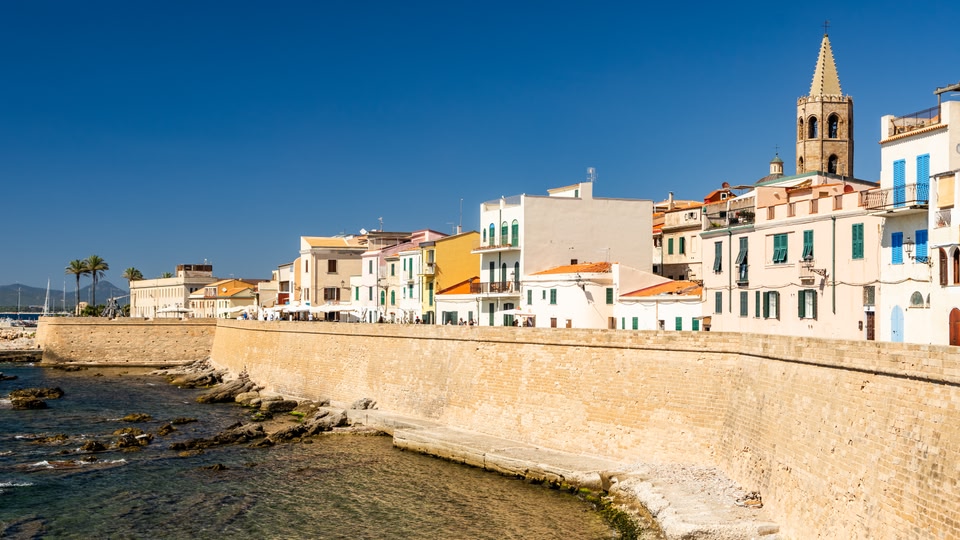
Alghero Sardinia
With winding cobbled streets, countless cute squares and ancient ruins dating back thousands of years, Alghero is a dream for history lovers.

Cagliari
This seaside city buzzes with energy. From sparkling beaches and archaeological sites to golden domes and busy cafes, come take the pulse of Sardinia’s vibrant capital.

Olbia
This unsung coastal city shows a different side of Sardinia. Come for its Roman monuments and pretty plazas, and stay for its cosy wine bars and seafood restaurants.
Sardinia: fast facts
| Language | Italian |
|---|---|
| Currency | Euro (€) |
| Time zone | Cagliari - UTC+1 (CET) and UTC+2 (CEST) |
| High season | June – September |
| Low season | November – March |

Sardinia highlights
Play in the water
You’ll find plenty of water sports to keep you busy along Sardinia’s Mediterranean coastline. Porto Pollo is known for its windsurfing, and Putzu Idu for its surf breaks. With crystal-clear waters to rival the Caribbean’s, diving is one of the best things to do in Sardinia — try Capo Testa and the Orosei Gulf’s Grotta del Bue Marino caves.
Visit ancient sites
Sardinia is home to fascinating archaeological sites, including thousands of Bronze Age structures called ‘nuraghi’ built by the Nuragic civilisation. For great examples, visit the Nuraghe La Prisgiona at Arzachena and the Su Nuraxi di Barumini. There are Roman ruins on the island too, like Cagliari and its 2nd-century amphitheatre and Nora, with its mosaics, temple and forum.
Take an epic hike
Make the most of Sardinia’s scenery on a hike. If you’re up for a challenge, take on the Selvaggio Blu Trek across the Gulf of Orosei’s wild coastline. For a more relaxing walk, explore the routes around San Pietro Island off Sardinia’s southwestern coast. Spending a day at Cala Luna beach? Tack on a hike around its picturesque sea cliffs.

Things to do in Sardinia
Top attractions
Reached by boat, Grotta del Bue Marino invites visitors into a world of petroglyphs, sea caves and underwater passages. See more of Sardinia’s wild side at Asinara National Park, where turquoise waters surround an island full of beaches, pirate legends and rare wildlife. At Su Nuraxi di Barumini, circular defensive towers are lasting reminders of early settlers.
Beaches
Sandy shorelines, crystal-clear water, dramatic coves and blazing sunshine — spending time on Sardinia’s beaches is a highlight of any trip. Soak up the rays on Cala Brandinchi’s snow-white sands, a beach known as ‘Little Tahiti’. For some of the island’s best snorkelling, take your pick from Capriccioli Beach and Tuerredda Beach.
Nature
Sardinia’s natural landscape is as diverse as it is breathtaking, with everything from powdery beaches to rugged mountains to explore. Take a boat trip around the Maddalena archipelago, known for its turquoise lagoons and deserted islands off the Costa Smeralda. And see wild white donkeys on the national park island of Asinara. For more wildlife, spot pink flamingos at the Molentargius Saline Natural Park.
Cuisine
Renowned for its health benefits, Sardinian cuisine is beloved all over the world. And thanks to its 1,800 kilometres of fertile coastline, seafood is a staple in many restaurants in Sardinia. You’ll never go wrong by ordering the daily catch, usually grilled with nothing more than olive oil and lemon. Snacking calls for ‘pane carasau’, a crispy flatbread. Love cheese? Try ‘pecorino sardo’.
Culture and museums
Take a break from the beach to explore the many museums in Sardinia. The Garibaldi Museum in Caprera was once home to celebrated Italian general Giuseppe Garibaldi. And the National Picture Gallery of Sassari features paintings from the Middle Ages to the 20th century. For a different type of art, visit the Murals of Orgosolo, showcasing anti-authoritarian street art from the 1960s.
Nightlife
The nightlife in Sardinia buzzes at the resorts set along the Costa Smeralda. Head to Porto Cervo for upscale lounges and open-air parties at exclusive beach clubs. Meanwhile, Alghero is all about cocktail and wine bars. April’s annual Bosa Beer Fest lures brew fans to the west coast town of Bosa.
Find the best time to visit Sardinia
Weather in Sardinia through the year
March – May: Typically mild and sunny, spring is perfect for hiking and outdoor sightseeing. Lively ‘Settimana Santa’ (Holy Week) parades take place across the island.
June – August: Summer brings clear blue skies and highs often climbing over 30°C. You’ll find beaches and water sports in full swing, but expect thicker crowds.
September – November: Things begin to cool down as the crowds and heat ease up in September. In October, Olbia hosts Benvenuto Vermentino, a week-long celebration of white wine, food and art.
December – February: Some restaurants and businesses close down in winter. If you don’t mind cooler weather, this is one of the best times to visit Sardinia for cheaper lodging options.
Events in Sardinia
Sant'Efisio Procession (May): The island celebrates Saint Ephysius with a colourful parade between Cagliari and Nora. Thousands in traditional dress join folk musicians, horsemen and the saint’s chariot in one of Italy’s longest processions.
S'Ardia di Sedilo (July): The town of Sedilo honours Constantine the Great with a horse race recreating a Roman battle. Expect food stands, folk dancing and live music alongside galloping knights and riflemen.
Time in Jazz (August): World-famous and emerging jazz artists perform at churches, lakesides, vineyards and other venues in and around Berchidda.
Autumn in Barbagia (September to December): Visit the villages of the mountainous Barbagia region for a showcase of rural traditions through artisan workshops, craft markets and food tastings.
Know before you go
Budget
While it can be a pricey travel destination, exploring Sardinia on a budget is still doable with some careful budgeting. In general, expect to pay under 20 euros (€) for a simple meal and less than €5 for a local beer. Need to catch a taxi? Short rides usually cost less than €10.
Health and safety
Sardinia is blessed with natural beauty, but it demands some caution. Ocean currents and jellyfish are potential coastal hazards, so check warning flags before swimming and snorkelling. When hiking, stay hydrated and avoid the midday heat. And use insect repellent and wear long sleeves to protect yourself from tick bites, especially in wooded areas.
Free things to do
Admiring Cagliari’s medieval rooftops from the Bastione di Santa Croce observation deck is free and especially magical at sunset. Wander the cobblestone streets of Gairo Vecchio, a ghost town frozen in time with homes clinging to steep hillsides. In San Gavino Monreale, contemporary murals celebrate Sardinian traditions alongside global pop culture, turning the town’s walls into an open-air gallery.
Family friendly
For a dose of adventure, hike along lush woodland trails before cooling off beneath the waterfalls of Sos Molinos. Or take on rope bridges, tree climbs and zip lines for all ages at Santa Lucia’s Sardegna Avventura Park. Near Tuili, Parco Sardegna in Miniatura sparks curiosity with miniature Sardinian landmarks, a dinosaur park and hands-on astronomy activities.

Getting around Sardinia
Public transport
Buses: Azienda Regionale Sarda Trasporti (ARST) has an extensive and affordable island-wide bus network. In small towns, purchase tickets from a local bar or tobacco shop. Paying fares on board is more expensive.
Trains: Trenitalia connects the island’s main towns and cities, including Cagliari, Olbia, Oristano and Sassari. Ride the vintage narrow-gauge ‘Green Train’ for scenic trips around Sardinia’s countryside and coastline. Check the Trenino Verde website for schedules.
Boats: Use passenger ferries to access offshore islands like La Maddalena and San Pietro Island. Delcomar and Maddalena Lines are major operators. Ferries also connect to mainland Italy, France and Spain.
Domestic flights
You’ll find major airports in Alghero, Cagliari and Olbia, all serving flights from the mainland and across Europe. Since it only takes around three hours to drive from Olbia to Cagliari, flying between Sardinia’s big cities isn’t really necessary.
Driving and car hire
Hiring a car or scooter is one of the best ways to explore Sardinia. Prepare for congestion around coastal resorts in summer, and go slowly along narrow and winding rural roads. When parking, pay attention to the different coloured street markings. White lines indicate free (sometimes limited) zones, while blue lines are paid zones.


